OSP’s future may depend on constitutional review – Felix Kwakye Ofosu
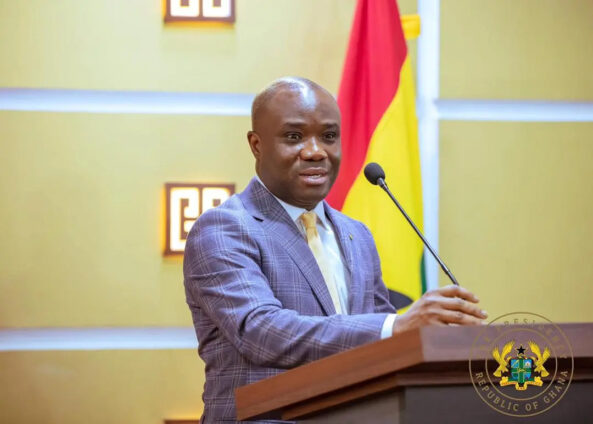
Government spokesperson Felix Kwakye Ofosu has hinted that Ghana may need constitutional reforms to secure the long-term future of the Office of the Special Prosecutor (OSP).
Speaking on PM Express on Monday, the Abura Asebu-Kwamankese MP rejected claims that the Mahama administration was plotting to weaken or scrap the anti-corruption office.
“Absolutely not,” he said when asked whether there was a coordinated effort within government to kill the OSP.
According to him, President John Mahama had previously intervened to stop attempts by some members of the then Majority in Parliament to abolish the office.
“You record that out of the blue, the Majority Leader and the Majority Chief Whip tabled a bill in Parliament to scrap the Office of Special Prosecutor,” he said.
“The president prevailed on the Majority Leader and the Majority Chief Whip to give the Special Prosecutor a chance.”
Felix Kwakye Ofosu argued that the current legal battles involving the OSP were rooted in constitutional interpretation and not political interference.
He explained that in one corruption case, a defendant challenged the Special Prosecutor’s authority to prosecute without the Attorney General’s approval under Article 88 of the Constitution.
“The court upheld his position,” he said, stressing that the judiciary had the authority to determine whether the OSP was acting within the law.
“What he does must accord with the law,” he stated.https://www.youtube.com/embed/qZ0w1zFoIfM?si=bVjPEl9xONwvR7hx
The government spokesperson also referred to a separate Supreme Court case challenging the OSP’s operational powers.
According to him, the Attorney General was only fulfilling his constitutional duty by presenting what he believed to be the proper interpretation of the law.
“The attorney general is bound to take the position of the law,” he said.
Felix Kwakye Ofosu maintained that President Mahama continued to support the anti-corruption office despite concerns about legal and constitutional limitations.
“He has said that there may be shortcomings, there may be teething problems, because it’s a relatively new institution, but let us give him or the office a chance to grow,” he noted.
He said any adverse ruling by the Supreme Court would have to be respected under Ghana’s constitutional order.
“If the Supreme Court decides, the way that our constitutional and legal arrangements work, it becomes binding on all parties,” he explained.
He then suggested that the ongoing constitutional review process could become the pathway for major reforms to secure the OSP’s future.
“Perhaps we can take advantage of this constitutional review process to correct that,” he said.
“But we cannot say that if it is believed by the Supreme Court… that the Special Prosecutor’s office is existing unlawfully or acting unlawfully, then we should still allow it to operate. That would fly in the face of the rule of law.”
Source: myjoyonline.com



About The Author