BoG confirms Bawumia’s Gold Reforms helped stabilise Cedi
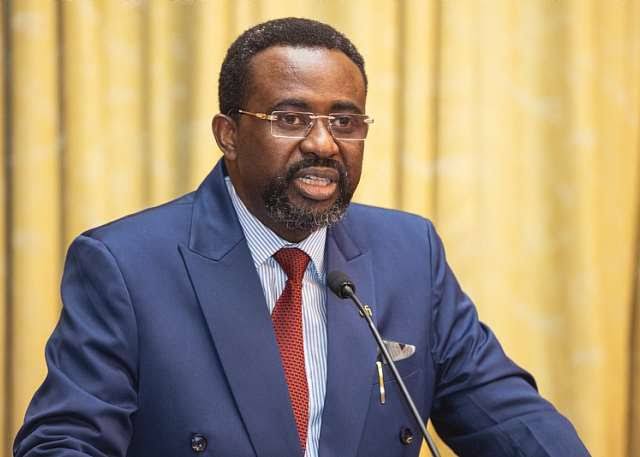
The Bank of Ghana has formally confirmed that the gold purchase reforms introduced by former Vice President Dr. Mahamudu Bawumia have played a key role in stabilizing the cedi and improving the country’s foreign exchange reserves.
The confirmation came during a parliamentary session on Thursday, in response to questions posed by Kojo Oppong-Nkrumah, MP for Ofoase Ayirebi and Ranking Member on Parliament’s Economy and Development Committee. Dr. Johnson Asiama, Governor of the Bank of Ghana, told the committee that the Domestic Gold Purchase Programme initiated in 2021 had increased BoG’s gold holdings significantly and provided an alternative source of foreign exchange.
Under the program, the central bank buys gold from licensed local aggregators and mining companies using cedis, and then sells it for dollars on the international market. The dollars are then used to support the local currency and fund critical imports such as fuel.
According to the BoG Governor, the policy has helped reduce pressure on the dollar, narrowed the gap between the official and parallel market rates, and contributed to the relative stability the cedi has enjoyed in the first half of 2026. He noted that gold reserves now form a substantial part of Ghana’s international reserves, giving the central bank more flexibility in managing external shocks.
Mr. Oppong-Nkrumah welcomed the validation, saying it proved that the reforms were not political rhetoric but sound economic policy. “For the first time, we are seeing the central bank acknowledge publicly that the gold for oil and gold purchase program delivered results in terms of FX and price stability,” he said.
The discussion also touched on broader central bank operations. The Finance Ministry announced that government has successfully raised GH¢5 billion to recapitalize the Bank of Ghana following losses recorded in 2022 and 2023. Officials said the recapitalization will strengthen BoG’s balance sheet, restore investor confidence, and enable it to carry out monetary policy more effectively.
Economists say the combination of higher gold reserves and improved central bank capitalization could help sustain cedi stability into the second half of the year, though challenges remain with debt servicing and inflation.
The BoG’s admission marks a shift in tone, as the current administration had previously been critical of the gold program. With global gold prices still strong, the central bank says it will continue to scale up domestic purchases while working to ensure transparency in the process.
For many Ghanaians, the news brings some relief amid ongoing cost-of-living concerns, as a stable cedi often translates to slower increases in fuel and food prices.



About The Author