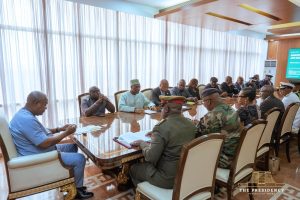
Government extends sympathy, activates emergency response to flood victims

ACCRA, Ghana
The government has expressed sympathy to victims of recent floods in Accra and other parts of the country, while reaffirming its commitment to long-term solutions for Ghana’s perennial flooding challenge. The Ministry of Works, Housing, and Water Resources says human indiscipline remains a major contributor to the disaster.
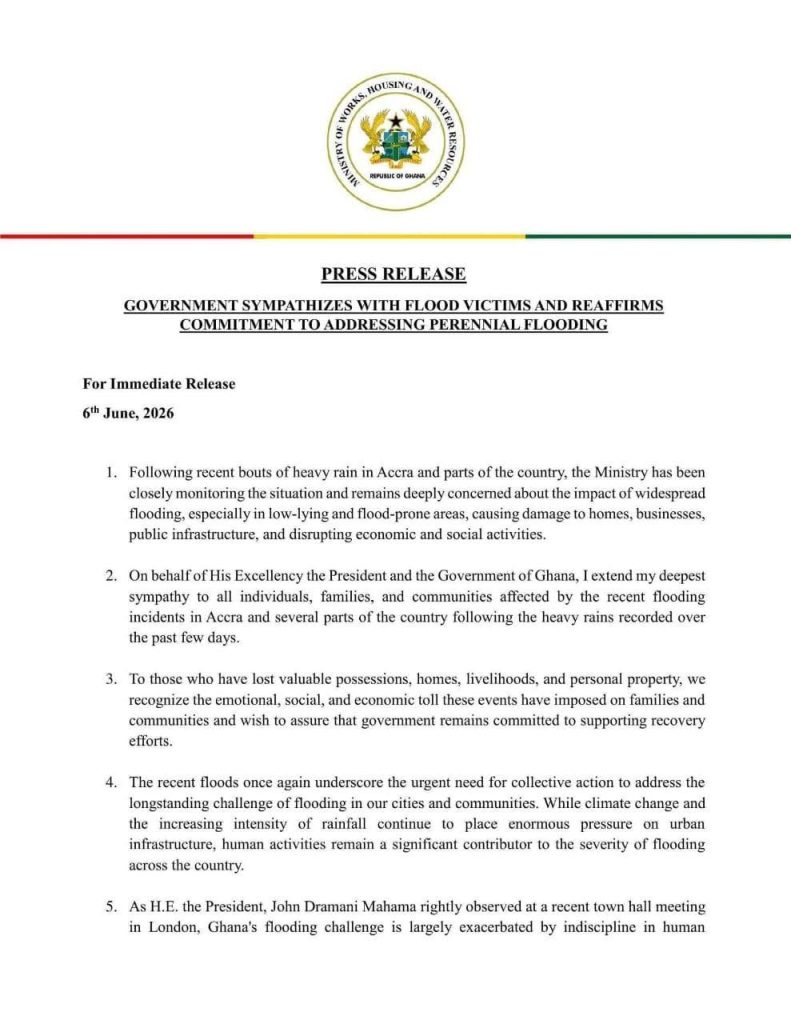
In a press release issued Saturday, June 6, 2026, the Ministry said it is closely monitoring the impact of heavy rains that have damaged homes, businesses, public infrastructure, and disrupted economic and social activities, especially in low-lying and flood-prone areas.
On behalf of President John Dramani Mahama and the Government of Ghana, the Ministry extended “deepest sympathy” to individuals, families, and communities affected by the recent flooding.
“To those who have lost valuable possessions, homes, livelihoods, and personal property, we recognize the emotional, social, and economic toll these events have imposed on families and communities and wish to assure that government remains committed to supporting recovery efforts,” the release stated.
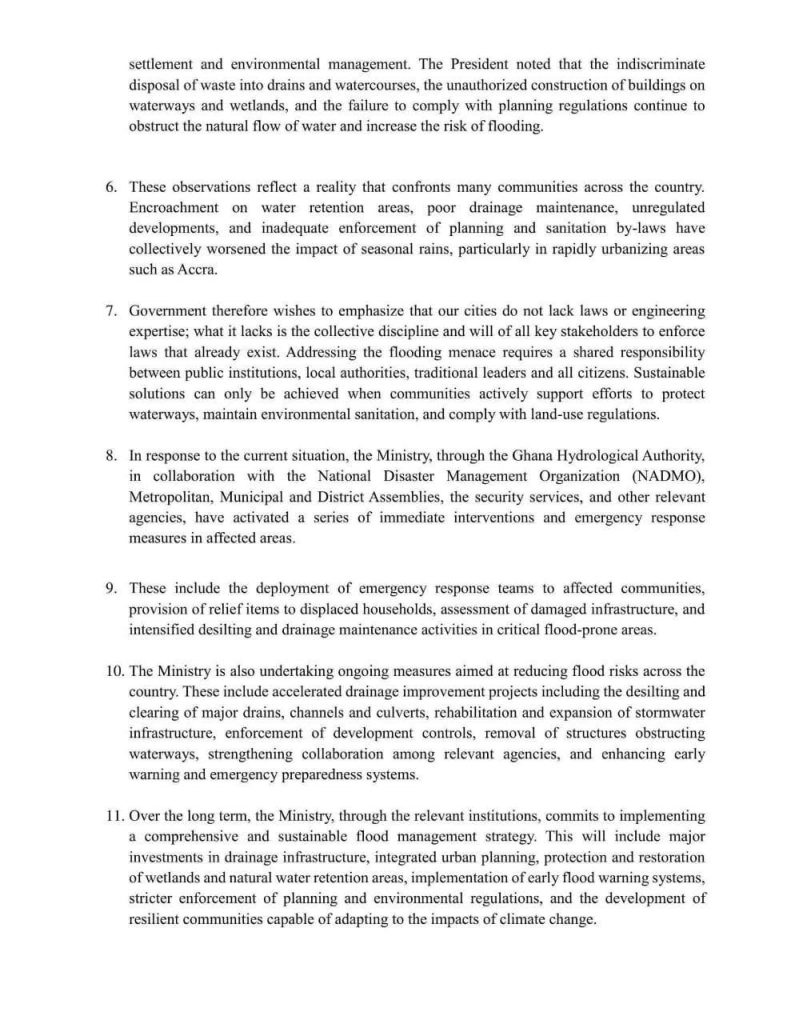
Emergency response has been activated through the Ghana Hydrological Authority, NADMO, Metropolitan, Municipal and District Assemblies, and security services. Actions include deploying emergency teams, providing relief items to displaced households, assessing damaged infrastructure, and intensifying desilting and drainage maintenance in flood-prone areas.
Human Activities Blamed Alongside Climate Change
The Ministry noted that while climate change and increasing rainfall intensity place pressure on urban infrastructure, human activities significantly worsen flooding across the country.
Citing President Mahama’s recent town hall meeting in London, the release said Ghana’s flooding challenge is “largely exacerbated by indiscipline in human behavior.” Key issues identified include indiscriminate disposal of waste in drains, construction on waterways and wetlands, poor drainage maintenance, unregulated development, and weak enforcement of planning and sanitation by-laws.
“The recent floods once again underscore the urgent need for collective action to address the longstanding challenge of flooding in our cities and communities,” the Ministry said. It added that the core problem is not a lack of laws or engineering expertise, but a lack of “collective discipline and will” to enforce existing regulations.
Short and Long-Term Measures Announced
For immediate relief, the government is accelerating drainage improvement works, including clearing major drains, channels, and culverts, and rehabilitating stormwater infrastructure. Enforcement of development controls and removal of structures blocking waterways will be strengthened, alongside enhanced early warning and emergency preparedness systems.
Long-term, the Ministry outlined a comprehensive flood management plan involving major investments in drainage infrastructure, integrated urban planning, protection and restoration of wetlands and water retention areas, early flood warning systems, and stricter enforcement of planning and environmental regulations.
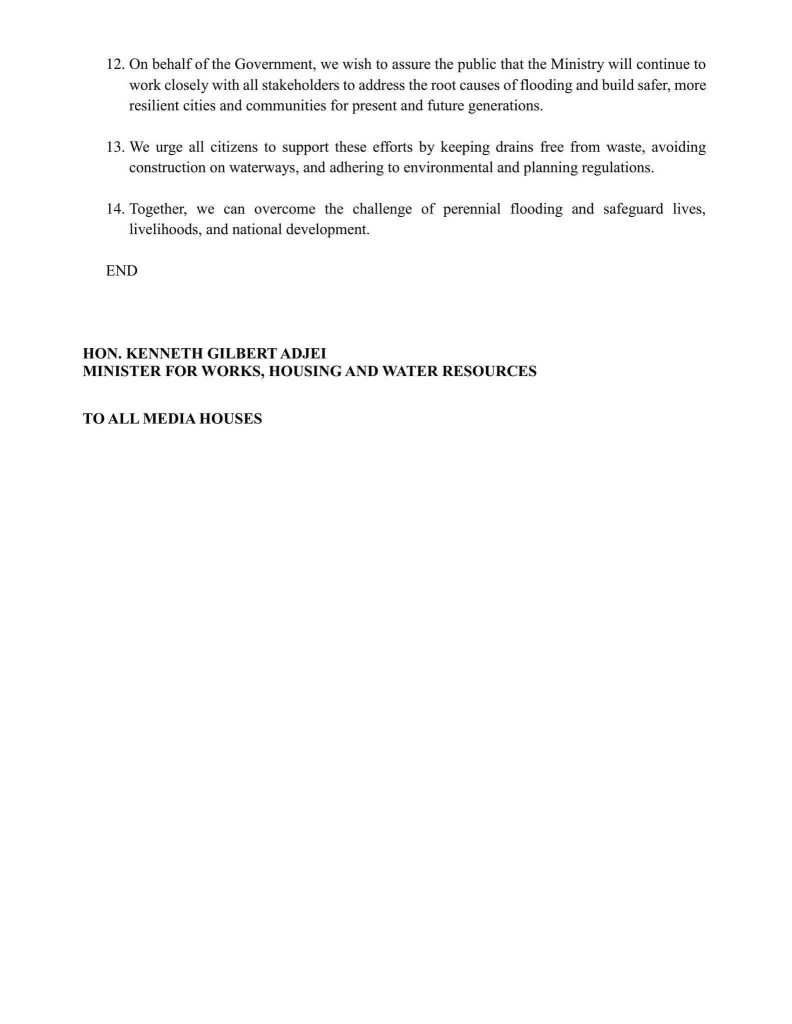
The government called for shared responsibility among state institutions, local authorities, traditional leaders, and citizens to build climate-resilient communities.



About The Author