Finance Minister Presents 2026 Mid-Year Budget Review to Parliament
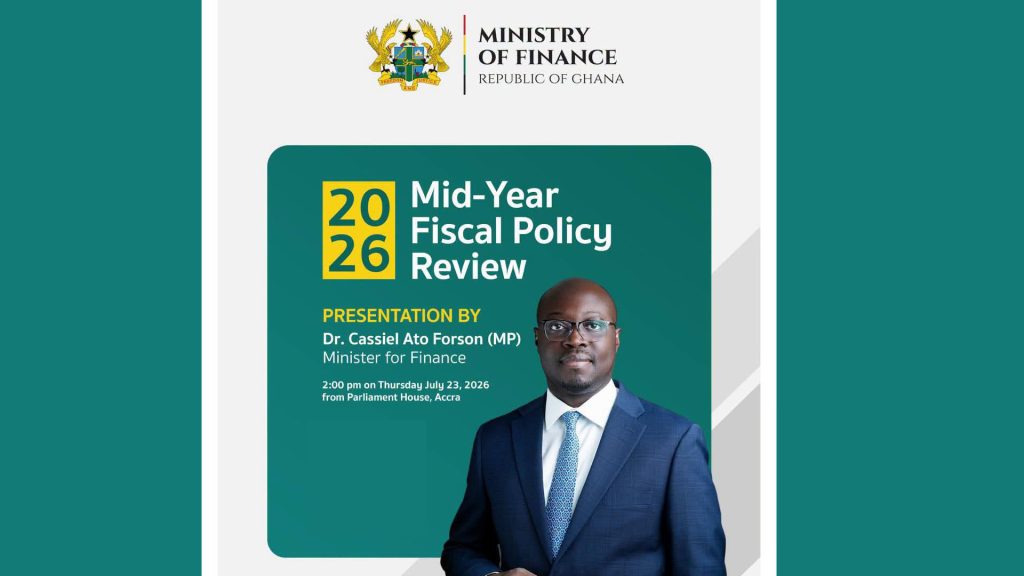
Accra, July 23, 2026 —
The Finance Minister today presented the 2026 Mid-Year Budget Review to Parliament, with government promising fiscal discipline, no new taxes, and a focus on protecting the economic “reset.”
The presentation comes six months into the year and is expected to guide spending and revenue policy for the rest of 2026. Ahead of the statement, Parliament had already approved $822 million in World Bank loans to support budget financing.
Key Focus Areas
Government said the priority is to stay within IMF program targets while creating jobs and stabilizing the economy. The Minister told lawmakers that he “won’t ask for more money” in this review, signaling that funding will come from reprioritization rather than fresh borrowing.
The Bank of Ghana also gave government some room, holding the policy rate at 14% and projecting that inflation will remain within target despite external pressures.
Jobs and Infrastructure Under the Microscope
The 24-Hour Economy policy and the “Big Push” road program dominated discussions ahead of the presentation.
Government says the 24-Hour Economy is already creating jobs across sectors. Critics however described the jobs as “audio announcements” and demanded evidence of actual implementation.
On roads, questions were raised over procurement. It was alleged that nearly 90% of Big Push projects were sole-sourced, prompting calls for more transparency.
Social Sectors
Education was flagged as a major concern. Lawmakers heard that the double-track system and teacher recruitment remain pressing issues. Government also announced plans to roll out a revised curriculum for KG and primary schools.
Reactions
Business leaders set out six tests for the reset to hold: inflation control, revenue performance, debt sustainability, job creation, forex stability, and efficiency in public spending. They urged government to maintain the course “without a safety net.
“The opposition warned of a revenue shortfall and called on government to avoid introducing unfunded policies. What Happens Next
Parliament will debate the review over the next few days, after which sector ministers are expected to give detailed breakdowns of allocations.
With elections 18 months away, today’s review is being watched closely as a signal of how government plans to balance economic stability with public demand for jobs and relief.



About The Author