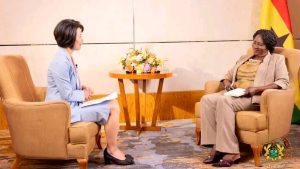
Vice President Prof. Naana Jane Opoku-Agyemang opens 2026 Global South Academic Forum in Shanghai
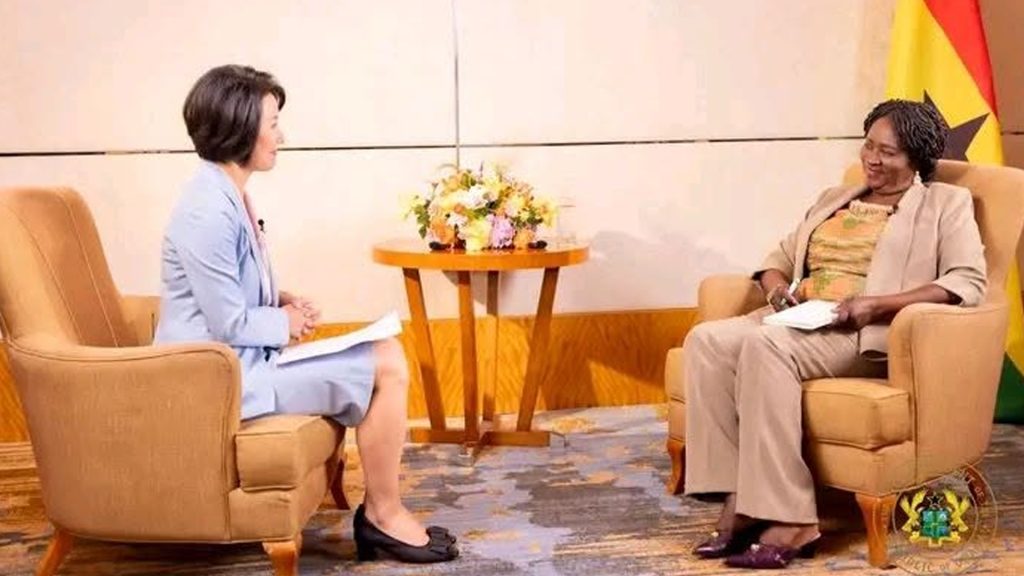
Vice President Prof. Naana Jane Opoku-Agyemang has officially opened the 2026 Global South Academic Forum (GSAF) in Shanghai, China, bringing together scholars, policymakers, and media professionals from Africa, Asia, Latin America, and the Caribbean to discuss governance and development.
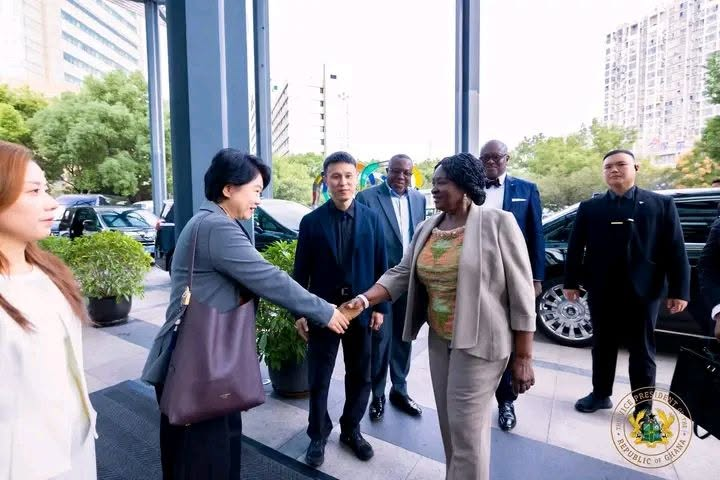
The forum, held on Saturday, October 17, 2026, is under the theme “Global South Political Parties: Governance and Modernisation” and is an initiative of the International Communication Research Institute of East China Normal University.
In her opening address, Prof. Opoku-Agyemang called for stronger South-South cooperation and a more equitable international order.
According to a statement from the Office of the Vice President, she reflected on the historical struggles that shaped the Global South, from the Pan-African vision of Osagyefo Dr. Kwame Nkrumah to liberation movements across Asia, Africa, Latin America and the Caribbean.
“Our shared history reminds us that political independence is only the beginning. The greater task is to build strong institutions, productive economies and systems that respond to our people’s aspirations,” she stated.
“Similarly, winning political power and governing effectively are related but not the same responsibility.”
The Vice President said political parties, governments, universities and other institutions must continually evolve, strengthen accountability, and build capacity to respond to changing realities. She noted that China’s development experience offers valuable lessons in long-term planning, industrialisation, and institutional coordination.
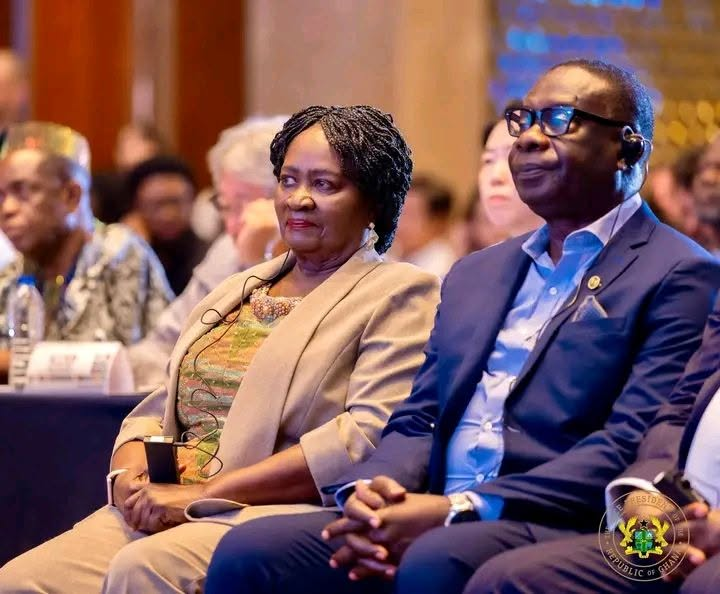
Making a strong case for multilateral reform, Prof. Opoku-Agyemang said the Global South must demand better multilateralism, not withdraw from it.
“The Global South should not respond by withdrawing from multilateralism. They should demand better multilateralism, more representation in international institutions, a global financial system that supports development without perpetuating vulnerability, and climate arrangements that recognise our shared responsibilities and different circumstances.”
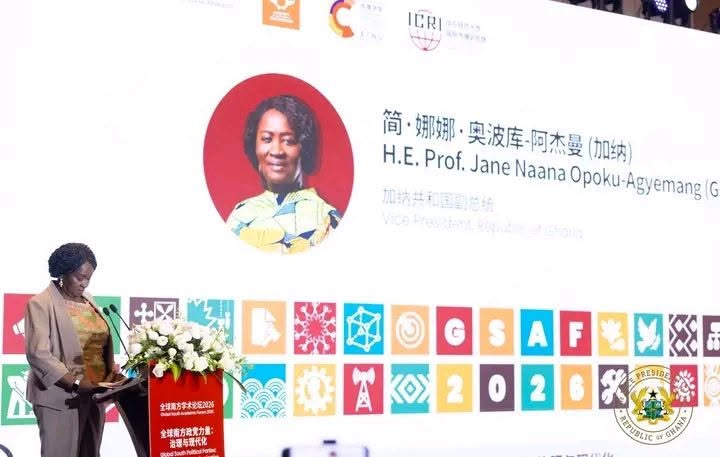
She argued that although countries of the Global South account for a substantial share of the world’s population, natural resources and economic activity, their representation in institutions that govern global political and economic affairs remains inadequate.
She further urged that global climate policies and international financial arrangements must not ignore the different economic circumstances and development priorities of developing countries.
“Cooperation does not require us to think alike. We must have the confidence to disagree respectfully, learn from one another’s successes and failures, and continue working together towards shared goals,” she added.
The Vice President also called for deeper collaboration among Global South universities in research, technology, artificial intelligence and innovation, and for partnerships that build local productive capacity and create opportunities for young people.
The forum provides an avenue for intellectual engagement on digital sovereignty, sustainable development and global governance. Ghana’s participation follows earlier engagements in January 2026, where a Ghanaian delegation explored China’s development experience in relation to Ghana’s 24-Hour Economy initiative.
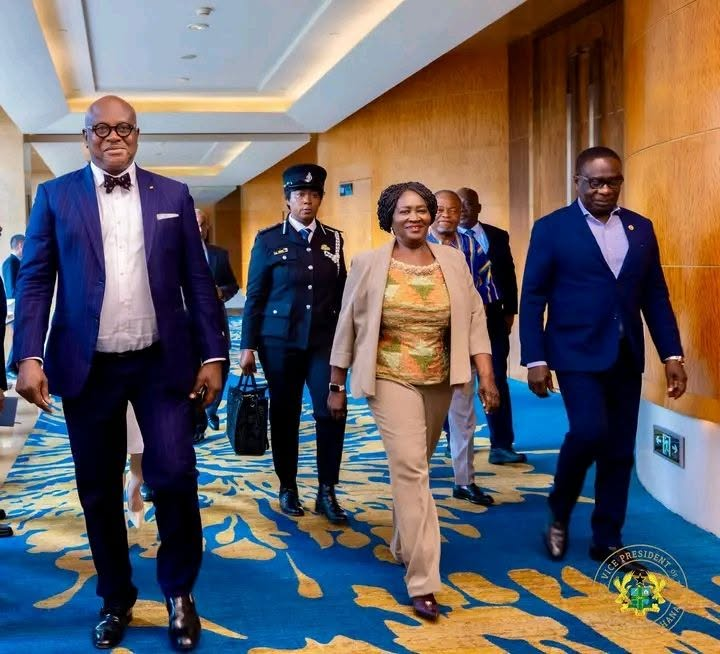
Prof. Opoku-Agyemang arrived in Shanghai on October 15 ahead of the forum.



About The Author