
NPP leads NDC 49% to 38% in Africa Policy Lens May 2026 voter survey
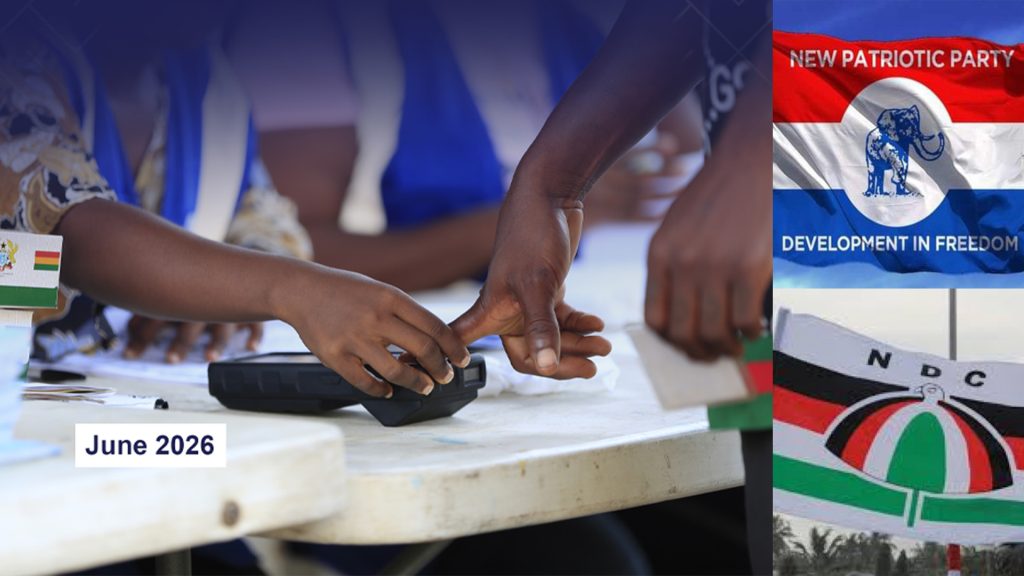
The New Patriotic Party has opened a clear lead over the ruling National Democratic Congress in national voter intention, according to a new survey by think tank Africa Policy Lens.
APL’s “National Voter Perception Poll” was conducted from May 23 to May 30, 2026. The poll sampled 6,483 registered voters across all 16 regions of Ghana. It measured political preferences, voter turnout likelihood, views on the economy, and perceptions of the country’s direction.
NPP leads with 49% support
The report found that 49% of respondents said they would vote for the NPP if elections were held today. The NDC followed with 38% support. Other political parties polled 2%, while 3% said they would not vote. A significant 8% of voters described themselves as undecided.
APL described the NPP’s margin as a “measurable advantage” but cautioned that the race remains open. “The NDC retains support from more than one-third of respondents, while approximately one in every twelve voters remains undecided,” the report stated.
Gender split shapes voter base
The survey revealed a sharp gender divide in party preference. Among male respondents, 51% backed the NPP compared to 36.7% for the NDC. Just 1.7% chose other parties, 7.5% were undecided, and 3.1% said they would not vote.
Women leaned the other way. The NDC led among females with 44% support, while 32.4% preferred the NPP. Other parties received 2.3%, 14.4% were undecided, and 6.9% said they would not vote. APL said the gender gap could influence campaign strategies as parties target different voter blocs.
Economy and national direction drive choices
According to APL, four factors are shaping voter decisions: perceptions of national direction, economic satisfaction, personal wellbeing, and likelihood to vote. Partisanship remains strong, but voters are also weighing government performance.
The poll showed a clear split. Voters who felt positive about the economy and the country’s direction were more likely to support the NDC. Those dissatisfied with economic conditions and pessimistic about the future leaned toward the NPP. “Current vote intention reflects both partisan loyalties and broader evaluations of governance and economic performance,” APL noted.
Undecided voters hold the balance
With 8% of voters still undecided, APL said this group could decide a close election. The think tank described them as “strategically important” and urged both parties to focus on policy messaging and economic solutions to win them over.
The full report is attached as a PDF. APL said it will release regional breakdowns and issue-based findings in the coming weeks as Ghana moves closer to the 2028 elections.



About The Author